
Software is now the backbone of every enterprise operation. Banking systems, healthcare platforms, supply chain networks, and government services all run on code. And attackers know it.
The 2020 SolarWinds breach compromised approximately 18,000 organizations, including major federal agencies, through a single tampered software update. The Log4Shell vulnerability, discovered in 2021, exposed hundreds of millions of devices globally through a widely used open-source logging library. These incidents share a common thread: security was treated as something to be bolted on rather than built in.
The numbers reinforce the urgency. According to IBM’s Cost of a Data Breach Report, the average cost of a data breach reached $4.45 million in 2023. Software vulnerabilities remain among the top attack vectors, and software supply chain attacks increased by over 600% between 2020 and 2022.
Traditional SDLC models served their purpose in a different era, but modern application threats demand a different approach. Security cannot be a final audit before go-live. It has to begin before a single line of code is written, and it has to run continuously through every sprint, every deployment, and every patch cycle.
That is exactly what Secure SDLC delivers.
This guide covers everything you need to know about Secure SDLC: what it is, why it matters, how each phase works, how DevSecOps fits in, which tools and frameworks support it, and how organizations are implementing it successfully across enterprises today.
What Is Secure SDLC?
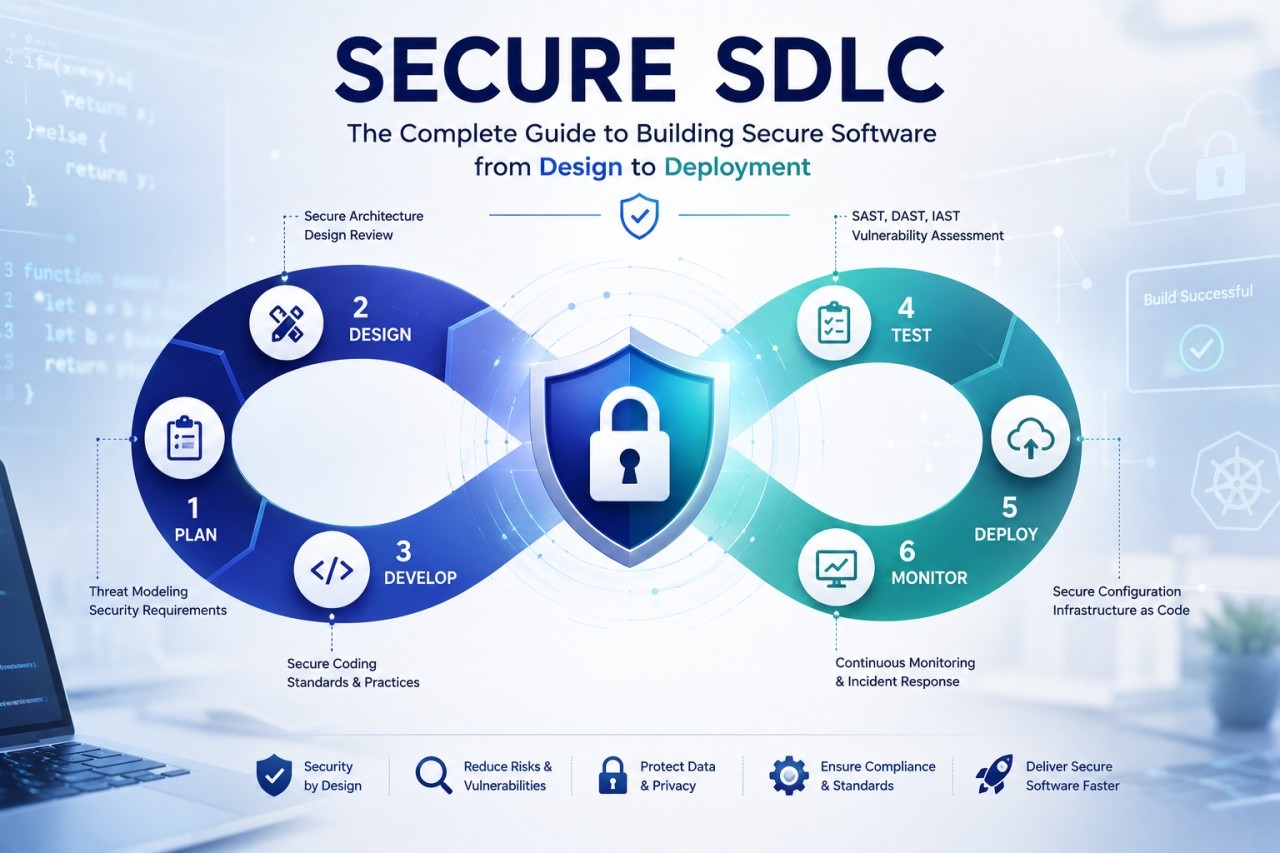
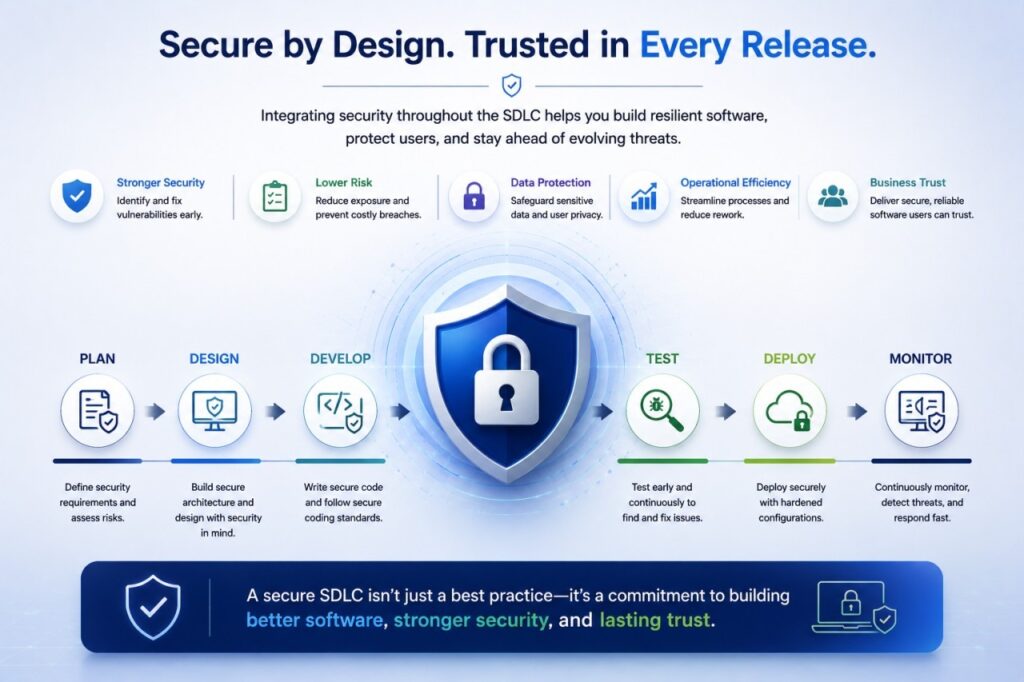
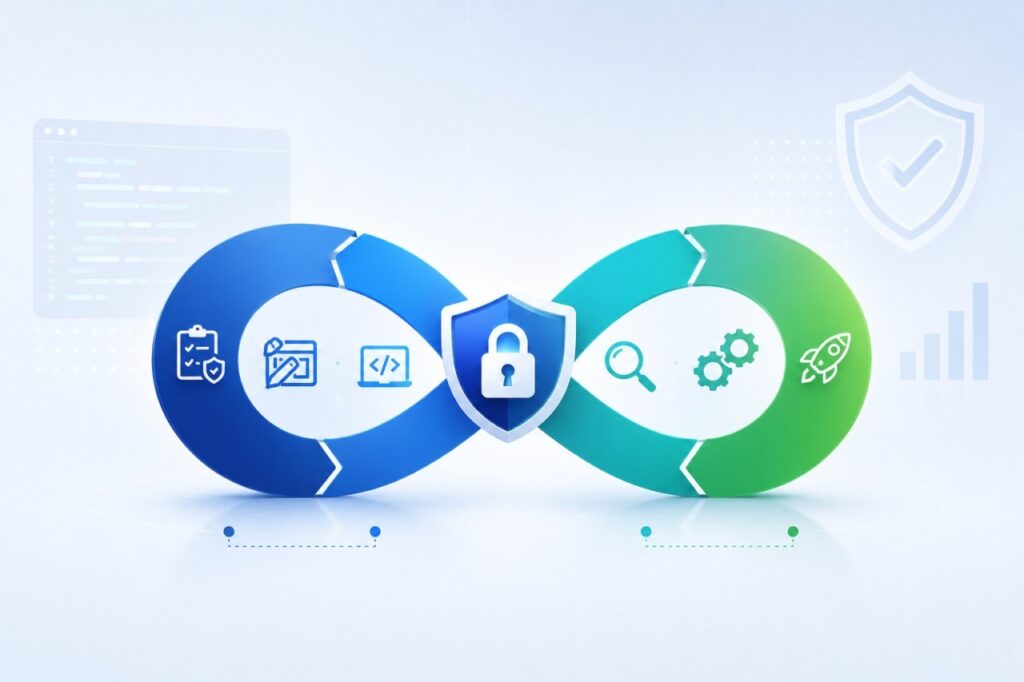
Secure SDLC (Secure Software Development Life Cycle) is a structured software development framework that integrates security controls, security testing, and security best practices into every phase of the software development process. Rather than addressing vulnerabilities after software is built, Secure SDLC ensures that security requirements are defined upfront, threats are modeled during design, code is reviewed for security issues during development, automated security tests run continuously, and deployments follow secure configuration standards.
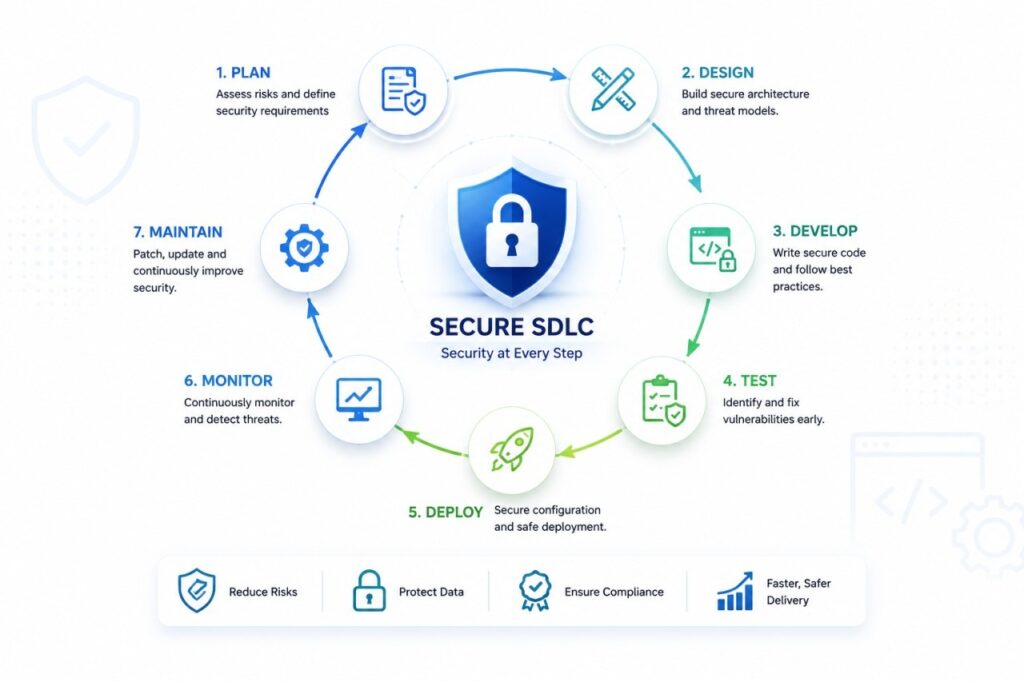
In short, Secure SDLC transforms security from a reactive checkpoint into a continuous, proactive engineering discipline.
Traditional SDLC vs Secure SDLC
Understanding the difference between traditional SDLC and Secure SDLC is critical for any organization modernizing its software development process.
| Aspect | Traditional SDLC | Secure SDLC |
|---|---|---|
| Security Timing | End of development cycle | Every phase |
| Security Responsibility | Security team only | Entire development team |
| Vulnerability Discovery | Late (pre-production or post-breach) | Early (design and development) |
| Cost of Fixes | High (production-stage fixes) | Low (design-stage fixes) |
| Compliance | Retroactive audit | Built-in compliance controls |
| Testing Approach | Manual, periodic | Automated, continuous |
| Threat Modeling | Rarely used | Core to design phase |
| Developer Security Training | Optional | Mandatory |
| Tool Integration | Minimal | CI/CD pipeline integrated |
| Risk Posture | Reactive | Proactive |
The contrast is significant. Traditional SDLC teams often discover security vulnerabilities during final testing or, worse, after deployment. Fixing a vulnerability in production costs roughly 30 times more than fixing it during the design phase.
Why Security Must Be Built Into Software
Software vulnerabilities are not simply technical defects. They are business liabilities. A single exploited vulnerability can result in regulatory fines, customer data loss, brand damage, litigation, and operational disruption.
Security built into the development process means every developer becomes part of the security posture. Secure architecture decisions reduce attack surface area before a product ships. Automated security testing catches issues before they reach production. Secure coding standards prevent common vulnerabilities like SQL injection, cross-site scripting, and insecure deserialization from ever being introduced.
Secure SDLC Objectives
The primary objectives of Secure SDLC include:
- Identifying and mitigating security risks during the earliest possible phases
- Embedding security requirements alongside functional requirements
- Training developers to write secure code by default
- Automating security validation throughout the CI/CD pipeline
- Ensuring continuous compliance with regulatory and industry standards
- Reducing the time, cost, and complexity of vulnerability remediation
Business Benefits of Secure SDLC
Secure SDLC delivers measurable business value beyond risk reduction:
- Lower remediation costs. Fixing vulnerabilities during design costs a fraction of fixing them post-deployment.
- Faster time to market. Catching issues early prevents late-stage delays from last-minute security reviews.
- Improved compliance. Built-in security controls simplify audits for PCI DSS, HIPAA, GDPR, SOC 2, and ISO 27001.
- Stronger customer trust. Demonstrating a commitment to secure software development builds customer and partner confidence.
- Reduced cyber insurance exposure. Mature security posture can lower insurance premiums.
- Competitive differentiation. Security-certified software development capabilities are increasingly demanded by enterprise customers and government contractors.
Why Organizations Need Secure SDLC
Increasing Cyber Attacks
Cyber attacks targeting software applications have surged in both frequency and sophistication. Web application attacks remain among the top threat categories according to Verizon’s Data Breach Investigations Report. Applications are increasingly the preferred entry point for attackers because they sit at the intersection of functionality and data.
Software Supply Chain Risks
Modern software is rarely built entirely from scratch. Organizations rely on open-source libraries, third-party SDKs, cloud APIs, and vendor-supplied components. Each dependency is a potential vulnerability. The SolarWinds and XZ Utils incidents demonstrated that attackers are now targeting the software supply chain directly, injecting malicious code into trusted libraries and update packages.
Software Composition Analysis (SCA) and Software Bill of Materials (SBOM) practices within Secure SDLC directly address this risk.
Regulatory Compliance
Regulatory bodies around the world are increasingly mandating secure software development practices. The U.S. Executive Order on Improving the Nation’s Cybersecurity (EO 14028) explicitly requires SBOM and secure development attestations for federal software suppliers. NIST’s Secure Software Development Framework (SSDF) provides a prescriptive baseline. PCI DSS 4.0, HIPAA, GDPR, SOC 2 Type II, and ISO 27001 all include requirements that are best met through a formalized Secure SDLC program.
Cloud-Native Applications
Cloud-native development introduces unique security challenges. Microservices, containers, serverless functions, and Kubernetes orchestration expand the attack surface significantly. Secure SDLC adapted for cloud-native environments addresses container security, Kubernetes security, secrets management, infrastructure-as-code security, and API security as core disciplines.
Open Source Dependency Risks
Over 90% of modern applications contain open-source components. Many of these components contain known vulnerabilities. Without systematic SCA integrated into the development process, organizations are often shipping software with exploitable dependencies they are not even aware of.
Customer Trust
Enterprise buyers and government agencies increasingly conduct application security assessments and require security certifications as part of procurement. Organizations that demonstrate mature Secure SDLC practices gain a measurable competitive advantage.
Cost Savings
The economics of Secure SDLC are compelling. Gartner research consistently shows that security issues identified and resolved during the design and development phases cost dramatically less than those discovered in production or after a breach. Proactive security investment delivers clear ROI through avoided breach costs, reduced remediation cycles, and faster compliance audits.
The Secure SDLC Lifecycle Explained
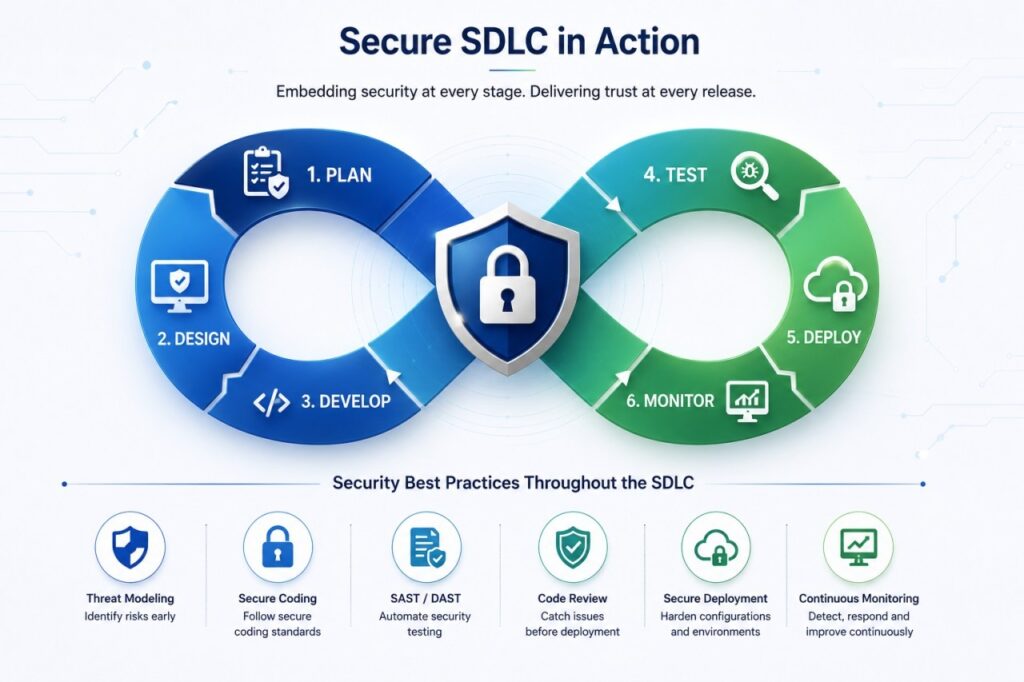
Secure SDLC applies security thinking and security controls to every phase of the software development lifecycle. Here is how each phase works.
Requirements Gathering
The requirements phase is where Secure SDLC diverges most sharply from traditional development. Security is not an afterthought here; it is a primary input.
Security Requirements
Security requirements define what the software must do from a security perspective. This includes authentication controls, authorization models, data protection requirements, audit logging needs, encryption standards, and session management policies. Security requirements are captured alongside functional requirements and treated with equal priority.
Compliance Requirements
Compliance requirements translate regulatory obligations into specific software controls. For a healthcare application, HIPAA requirements might specify data encryption at rest, audit trail requirements, and minimum session timeout policies. For a payment processing system, PCI DSS requirements dictate cardholder data handling, transmission security, and access control standards.
Risk Assessment
A preliminary risk assessment at the requirements stage identifies the highest-value assets the software will handle, the likely threat actors, and the potential business impact of a breach. This risk profile informs design decisions, testing priorities, and security investment levels throughout the project.
Design Phase
The design phase is where security architecture decisions are made. Mistakes made here propagate through every subsequent phase and become exponentially more expensive to correct.
Threat Modeling
Threat modeling is a structured process for identifying, analyzing, and mitigating potential threats to a software system during the design phase. Common frameworks include STRIDE (Spoofing, Tampering, Repudiation, Information Disclosure, Denial of Service, Elevation of Privilege), PASTA, and LINDDUN.
Effective threat modeling answers four questions:
- What are we building?
- What can go wrong?
- What will we do about it?
- Did we do a good enough job?
Tools like Microsoft Threat Modeling Tool, OWASP Threat Dragon, and IriusRisk support structured threat modeling practices.
Secure Architecture
Secure architecture establishes the structural security properties of the system: network segmentation, authentication architecture, authorization framework, data flows, encryption boundaries, and API security controls. Security architecture reviews at this stage catch fundamental design flaws before development begins.
Attack Surface Analysis
Attack surface analysis systematically identifies every entry point an attacker could potentially use to interact with the system: APIs, user interfaces, data imports, administrative interfaces, third-party integrations, and background processes. Reducing attack surface area is one of the most effective security engineering practices.
Development Phase
The development phase is where secure coding practices, code reviews, secrets management, and dependency management come together.
Secure Coding Practices
Secure coding means writing code that resists exploitation. This includes input validation, output encoding, proper error handling, avoiding insecure functions, using parameterized queries to prevent SQL injection, and following language-specific security guidance from OWASP, CERT, and CWE.
Organizations should adopt formal secure coding standards such as OWASP Secure Coding Practices, SEI CERT Coding Standards, or CIS Benchmarks for their specific technology stack.
Secrets Management
Hardcoded credentials, API keys, database passwords, and cryptographic keys in source code represent one of the most common and most exploited vulnerabilities. Secure SDLC mandates secrets management practices including storing secrets in dedicated vaults like HashiCorp Vault or AWS Secrets Manager, scanning code repositories for secrets using tools like GitLeaks or Trufflehog, and enforcing secrets rotation policies.
Dependency Management
Every third-party library added to a project is a potential vulnerability. Dependency management within Secure SDLC includes maintaining an inventory of all dependencies, integrating SCA tools like Snyk, OWASP Dependency-Check, or GitHub Dependabot, and establishing policies for addressing known vulnerabilities in dependencies before they reach production.
Code Review
Security-focused code review is a critical control in Secure SDLC. Peer code review catches both functional bugs and security issues. Security champions within development teams provide specialized security review expertise. Automated code scanning tools like SonarQube, Checkmarx, and Veracode supplement manual code review at scale.
Testing Phase
The testing phase in Secure SDLC goes far beyond functional quality assurance. It encompasses a full spectrum of security testing disciplines.
Static Application Security Testing (SAST)
SAST analyzes source code, bytecode, or binary code without executing the application. It identifies vulnerabilities like SQL injection patterns, buffer overflows, cross-site scripting risks, and insecure cryptography usage early in the development cycle. Tools include Checkmarx, Veracode Static Analysis, SonarQube, GitHub Advanced Security, and GitLab SAST.
SAST integrates naturally into the CI/CD pipeline, providing developers with security feedback within seconds of committing code.
Dynamic Application Security Testing (DAST)
DAST tests a running application by simulating attacker behavior from the outside. Unlike SAST, DAST does not require access to source code and tests the application in its actual runtime environment. It discovers runtime vulnerabilities such as authentication weaknesses, insecure HTTP headers, and OWASP Top 10 issues that may only be visible at runtime. Tools include OWASP ZAP, Burp Suite, and Invicti.
Interactive Application Security Testing (IAST)
IAST operates from inside a running application using instrumented agents. It combines the speed of DAST with the code-level precision of SAST, providing highly accurate vulnerability detection with low false positive rates. IAST is particularly valuable in CI/CD environments where test automation already exercises application code paths.
Software Composition Analysis (SCA)
SCA analyzes application dependencies to identify open-source components with known vulnerabilities, license compliance issues, and outdated versions. Given that most modern applications consist of 70-90% open-source code, SCA is not optional. Tools include Snyk, OWASP Dependency-Check, Black Duck, and GitHub Dependabot. SCA output feeds directly into SBOM generation.
API Security Testing
APIs have become the primary attack surface for modern applications. API security testing verifies authentication, authorization, input validation, rate limiting, and data exposure controls at the API layer. Tools like 42Crunch, Salt Security, and OWASP ZAP support dedicated API security testing workflows.
Penetration Testing
Manual penetration testing by experienced security professionals remains an essential Secure SDLC control. Penetration testing simulates real-world attacks to identify vulnerabilities that automated tools miss, including business logic flaws, chained attack paths, and complex authorization bypass scenarios. Organizations should conduct penetration testing at major release milestones and after significant architectural changes.
Deployment Phase
Secure deployment ensures that correctly written, thoroughly tested software is not undermined by insecure infrastructure configuration or deployment practices.
Infrastructure Security
Infrastructure as Code (IaC) tools like Terraform and AWS CloudFormation should be scanned for security misconfigurations using tools like Checkov, tfsec, or Aqua Security. Container images should be scanned for vulnerabilities before deployment using tools like Trivy, Aqua Security, or Prisma Cloud. Kubernetes configurations should be validated against security benchmarks using tools like kube-bench.
Secure CI/CD
The CI/CD pipeline itself is a target. Pipeline security includes securing source code repositories with Git security controls, enforcing branch protection rules, using signed commits, protecting CI/CD credentials with secrets management, scanning pipeline configurations for security issues, and ensuring only authorized users can trigger production deployments.
Identity Security
Deployment processes should use machine identities and service accounts with strictly scoped permissions. Human access to production systems should be limited, logged, and governed through PAM (Privileged Access Management) solutions. Zero standing access policies, just-in-time access controls, and strong MFA requirements apply at deployment boundaries.
Least Privilege
Every service, application, and user account operating in the deployment environment should have the minimum permissions required to perform its function. This principle of least privilege limits blast radius when credentials are compromised or accounts are hijacked.
Operations and Maintenance
Secure SDLC does not end at deployment. Continuous security operations are essential.

Continuous Monitoring
Runtime security monitoring through tools like Microsoft Defender for Cloud, Prisma Cloud, or AWS Security Hub provides ongoing visibility into application behavior, infrastructure security posture, and emerging threats. Runtime Application Self-Protection (RASP) agents can detect and block attacks in real time from within the application runtime.
Vulnerability Management
Newly discovered vulnerabilities in running software, its dependencies, and its underlying infrastructure require systematic tracking and remediation. A mature vulnerability management program includes continuous scanning, risk-based prioritization, defined SLAs for remediation, and tracking through resolution.
Patch Management
Timely patching of operating systems, middleware, application frameworks, and dependencies is a fundamental security hygiene practice. Automated patch management tooling integrated with SBOM data enables organizations to identify and prioritize patches based on actual software inventory.
Incident Response
Even with a mature Secure SDLC program, incidents can occur. Application-level incident response capabilities include security logging with SIEM integration, documented incident response playbooks, forensic readiness, and regular tabletop exercises.
Shift Left Security Explained
“Shift left” refers to moving security activities earlier in the software development timeline, from the right side of the development timeline (testing and deployment) to the left side (requirements, design, and development).
Why Shift Left Matters
The core principle behind shift-left security is simple but powerful: the earlier a vulnerability is found, the cheaper and faster it is to fix. A vulnerability discovered during requirements costs almost nothing to address. The same vulnerability discovered after production deployment can cost 100 times more to fix and carry significant business consequences.
Benefits of Shift Left Security
- Developers receive security feedback in real time, not weeks after code is written
- Security issues are addressed while context is fresh, not months later
- Automated SAST in CI/CD pipelines provides immediate feedback on each commit
- Threat modeling during design prevents entire vulnerability classes from being introduced
- Security training embedded in development workflows improves developer security literacy over time
Implementing Shift Left Security
Practical shift-left implementation includes:
- Integrating SAST tools directly into developer IDEs and CI/CD pipelines
- Running SCA scans automatically on every dependency update
- Including security acceptance criteria in user stories and sprint planning
- Conducting threat modeling workshops during architecture and design reviews
- Establishing security champions programs within development teams
- Providing developer security training including secure coding courses and OWASP resources
Enterprise Examples of Shift Left Security
Microsoft’s Security Development Lifecycle (SDL), Google’s Application Security program, and Amazon’s Security Review processes all embody shift-left principles. These organizations have demonstrated that at scale, shifting security left reduces both vulnerability counts and incident response costs substantially.
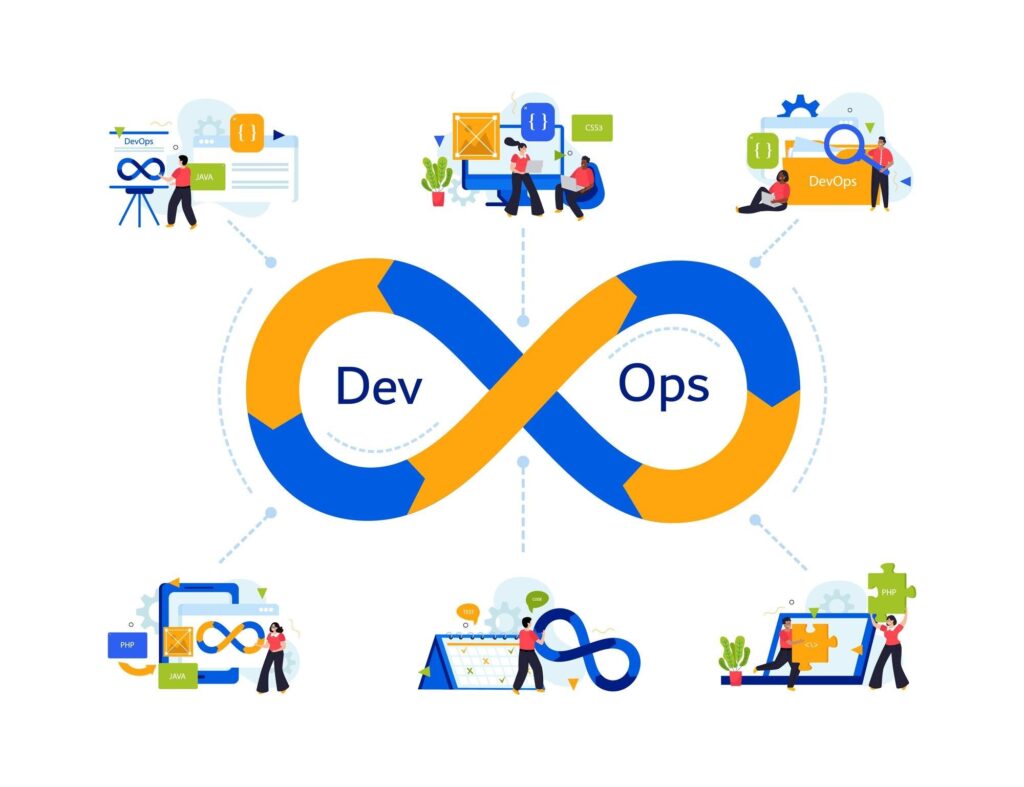
DevSecOps vs Secure SDLC
DevSecOps and Secure SDLC are closely related but serve different purposes. Understanding the relationship helps organizations make better decisions about tooling, process design, and program maturity.
Similarities Between DevSecOps and Secure SDLC
Both DevSecOps and Secure SDLC share core principles:
- Security is everyone’s responsibility, not just the security team’s
- Security must be integrated throughout the development process
- Automation is essential for security at scale
- Continuous feedback loops between development and security improve outcomes
- Compliance and security controls should be built in, not bolted on
Key Differences
| Aspect | Secure SDLC | DevSecOps |
|---|---|---|
| Scope | Software development process | Entire DevOps pipeline |
| Focus | Security phases within SDLC | Automating security in CI/CD |
| Origin | Software engineering discipline | DevOps + Security integration |
| Tooling Emphasis | Phase-specific security controls | Pipeline-integrated automation |
| Culture | Security-aware development | Security as a shared culture |
| Applicability | Any development methodology | Specifically DevOps environments |
| Speed Focus | Quality and security assurance | Speed and continuous delivery |
Which One Should You Adopt?
The right answer is both. Secure SDLC provides the structured framework of security controls across development phases. DevSecOps provides the automation, culture, and tooling to make those controls work at the speed of modern continuous delivery. Organizations adopting Agile and CI/CD methodologies need DevSecOps to operationalize Secure SDLC principles at scale.
Think of Secure SDLC as the blueprint and DevSecOps as the construction methodology that brings it to life.
Security Testing Throughout the SDLC
Effective Secure SDLC programs layer multiple security testing approaches to provide comprehensive coverage across different vulnerability types and development stages.
| Testing Type | When Used | What It Finds | Key Tools |
|---|---|---|---|
| SAST | During development, in CI/CD | Code-level vulnerabilities | Checkmarx, SonarQube, Veracode |
| DAST | Staging, pre-production | Runtime vulnerabilities | OWASP ZAP, Burp Suite, Invicti |
| IAST | Testing, CI/CD | Instrumented runtime issues | Contrast Security, Hdiv |
| RASP | Production | Active runtime attacks | Contrast Security, Sqreen |
| SCA | Continuous, CI/CD | Vulnerable dependencies | Snyk, Black Duck, Dependabot |
| Pen Testing | Pre-release, major changes | Complex attack paths | Manual + Kali Linux, Burp Suite |
| Container Scanning | CI/CD, pre-deployment | Container vulnerabilities | Trivy, Aqua, Prisma Cloud |
| API Security | CI/CD, staging | API-specific vulnerabilities | 42Crunch, OWASP ZAP, Salt Security |
SAST in Depth
SAST is the most developer-friendly security testing method because it integrates directly into the tools developers already use. GitHub Advanced Security, GitLab SAST, and IDE plugins for SonarQube bring security feedback to the point of code creation. SAST catches vulnerabilities like injection flaws, hardcoded secrets, insecure cryptographic usage, and dangerous function calls at the source code level.
DAST in Depth
DAST complements SAST by testing the application in its running state. It simulates how an attacker would probe the application from the outside, discovering vulnerabilities like authentication bypasses, insecure session management, and content injection that may not be visible in static analysis. DAST works well in staging environments and can be automated within CI/CD pipelines.
IAST in Depth
IAST agents instrument the application at runtime, monitoring code execution paths during testing. This produces extremely accurate vulnerability findings because the agent can trace the exact path a vulnerability takes through the application. IAST is particularly valuable for complex enterprise applications where high SAST false positive rates create developer fatigue.
RASP in Depth
Runtime Application Self-Protection operates within the production application, monitoring behavior in real time and blocking attacks as they occur. RASP provides a last line of defense against zero-day exploits and attacks that bypass perimeter security controls.
Manual Penetration Testing
Automated tools are excellent at finding known vulnerability patterns, but they cannot replicate the creative thinking of an experienced penetration tester. Manual penetration testing uncovers business logic flaws, chained vulnerability paths, and application-specific attack scenarios that tools consistently miss. Regular penetration testing by qualified security professionals remains an essential Secure SDLC control.
Container Security Testing
Container images often include vulnerable OS packages, exposed ports, root user configurations, and hardcoded credentials. Container security scanning integrated into the CI/CD pipeline catches these issues before deployment. Tools like Trivy, Aqua Security, and Prisma Cloud provide automated container image scanning with integration into popular container registries.
OWASP Top 10 and Secure SDLC
The OWASP Top 10 represents the most critical web application security risks. A mature Secure SDLC program directly addresses each of these risks through specific controls.
| OWASP Risk | Secure SDLC Control |
|---|---|
| A01 Broken Access Control | Threat modeling, authorization design review, SAST, DAST |
| A02 Cryptographic Failures | Secure coding standards, encryption requirements, SAST |
| A03 Injection | Input validation standards, parameterized queries, SAST, DAST |
| A04 Insecure Design | Threat modeling, security architecture reviews |
| A05 Security Misconfiguration | IaC scanning, configuration review, container scanning |
| A06 Vulnerable and Outdated Components | SCA, SBOM, dependency management policies |
| A07 Identification and Authentication Failures | Security requirements, IAM review, penetration testing |
| A08 Software and Data Integrity Failures | SCA, supply chain security, code signing |
| A09 Security Logging and Monitoring Failures | Logging requirements, monitoring controls, SIEM integration |
| A10 Server-Side Request Forgery | Threat modeling, SAST, DAST, penetration testing |
The OWASP Application Security Verification Standard (ASVS) provides detailed verification requirements that complement the Top 10 and serve as a comprehensive benchmark for Secure SDLC maturity.
Secure Coding Best Practices
Secure coding is the foundation of Secure SDLC. Developers who understand and apply secure coding principles prevent the most common vulnerability classes before they are ever introduced.
Input Validation
All input from external sources, whether from users, APIs, files, or databases, must be validated before being processed. Input validation should verify data type, length, format, and range. Never trust client-side validation alone; always validate on the server side.
Authentication
Authentication controls should be implemented using proven libraries and frameworks rather than custom-built solutions. Password policies should enforce length, complexity, and breach-password checking. Multifactor authentication should be available and encouraged or required based on risk profile. OAuth 2.0 and OpenID Connect provide standardized authentication frameworks for modern applications.
Authorization
Authorization logic should enforce least privilege at every layer. Role-based access control (RBAC) and attribute-based access control (ABAC) models should be designed during the architecture phase and consistently enforced. Authorization checks should never rely solely on client-provided data.
Encryption
Sensitive data should be encrypted at rest using AES-256 or equivalent. Transmission should use TLS 1.2 or higher. Cryptographic implementations should use well-vetted libraries rather than custom cryptography. Key management should follow established standards, with secrets stored in dedicated key management systems.
Session Management
Sessions should use cryptographically random tokens of sufficient length. Sessions should expire after inactivity periods appropriate to the application’s risk profile. Logout should invalidate sessions server-side. Session tokens should not be transmitted in URLs or logged in application logs.
Error Handling
Error messages displayed to users should never reveal implementation details, stack traces, or database structure. All errors should be logged internally with sufficient detail for debugging while presenting generic messages externally. Exception handling should be comprehensive to prevent unexpected application states.
Logging
Security-relevant events should be logged including authentication successes and failures, authorization failures, input validation failures, session activity, and data access events. Logs should be protected from tampering and transmitted to a centralized SIEM for analysis. Logging should comply with privacy regulations to avoid logging sensitive personal data.
Dependency Management
All third-party dependencies should be pinned to specific versions. SCA tools should be integrated into the CI/CD pipeline. A process for regularly reviewing and updating dependencies should be defined and followed. A vendor security notification monitoring process should be established.
Secrets Management
Secrets should never appear in source code, configuration files committed to version control, or application logs. All secrets should be stored in dedicated secrets management systems. Secrets should be rotated on defined schedules and on any suspected compromise event.
Secure SDLC Best Practices
Security Training
Developer security training is not a one-time onboarding activity. Continuous security education should cover OWASP Top 10, secure coding practices for the specific languages and frameworks used, emerging threat patterns, and security tool usage. OWASP SAMM provides a maturity model for security education programs.
Threat Modeling
Threat modeling should be a standard part of every significant design effort. Lightweight threat modeling can be incorporated into sprint ceremonies for Agile teams. Security champions can facilitate threat modeling sessions with development teams who lack formal security backgrounds.
Code Reviews
Security-focused code review should be a required gate for all code merged to production branches. Security checklist items should be integrated into code review templates. Security champions and application security engineers should participate in review of high-risk code components.
Automated Security Testing
Automation is what makes Secure SDLC scalable in modern continuous delivery environments. SAST, DAST, SCA, container scanning, and IaC scanning should all be integrated into the CI/CD pipeline with defined pass/fail thresholds. Security findings should generate developer tickets with remediation guidance.
Identity Security
Identity and Access Management is foundational to application security. Applications should integrate with enterprise identity providers, enforce MFA, implement fine-grained access controls, and follow Zero Trust principles for service-to-service authentication.
Continuous Compliance
Compliance requirements should be mapped to specific security controls, and those controls should be verified automatically as part of the CI/CD process. Compliance as Code approaches use tools like Open Policy Agent (OPA) and AWS Config to enforce compliance policies automatically. This eliminates the gap between development velocity and compliance assurance.
Zero Trust Security
Zero Trust architecture assumes no user or system is inherently trustworthy. Applications designed under Zero Trust principles verify every access request explicitly, enforce least privilege, and assume breach. Zero Trust applied to application development means strong service-to-service authentication, encrypted east-west traffic, and continuous authorization validation.
Secure Cloud Development
Cloud-native application security requires extending Secure SDLC principles to infrastructure configuration, container builds, serverless functions, and API gateways. Infrastructure as Code scanning, cloud security posture management, and cloud workload protection platforms provide the necessary security controls for cloud-native environments.
Secure SDLC Implementation Checklist
Requirements Phase
- Define security and compliance requirements alongside functional requirements
- Conduct preliminary risk assessment
- Identify applicable regulatory requirements
- Define data classification and handling requirements
Design Phase
- Complete threat model for major components
- Conduct security architecture review
- Complete attack surface analysis
- Define authentication and authorization architecture
- Define encryption and key management approach
Development Phase
- Establish secure coding standards for project technology stack
- Integrate SAST tools into developer IDE and CI pipeline
- Configure SCA scanning for all dependencies
- Implement secrets management for all credentials
- Conduct security-focused code review
Testing Phase
- Run SAST against all code changes
- Run DAST against staging environment
- Complete SCA scan with no high-severity unmitigated findings
- Complete API security testing
- Conduct penetration test for major releases
Deployment Phase
- Scan container images before deployment
- Validate IaC configurations with security scanning
- Enforce least privilege for all deployment service accounts
- Verify secrets are not exposed in deployment configurations
- Review CI/CD pipeline access controls
Operations Phase
- Deploy runtime monitoring and alerting
- Establish vulnerability management SLAs
- Configure centralized security logging
- Define incident response playbook
- Schedule periodic penetration testing and security assessments
Common Secure SDLC Challenges
Legacy Applications
Legacy applications were not built with modern security requirements in mind. Retrofitting Secure SDLC controls onto legacy codebases is genuinely difficult. Outdated frameworks, undocumented dependencies, monolithic architectures, and lack of automated test coverage all make security improvement efforts slow and risky. Organizations tackling legacy application security should prioritize based on risk, start with SCA and DAST (which require minimal code access), and build toward incremental modernization rather than expecting overnight transformation.
Developer Skill Gaps
Many development teams have limited formal security training. Secure coding, threat modeling, and security tool usage are not consistently taught in computer science curricula. This creates a gap between security expectations and developer capability. Security champions programs, embedded application security engineers, and mandatory security training modules help close this gap, but organizations should expect it to take time and sustained investment.
Tool Integration
The application security tooling landscape is fragmented. SAST, DAST, IAST, SCA, container scanning, and secrets scanning tools often come from different vendors with different reporting formats, different API designs, and different CI/CD integration approaches. Managing tool sprawl, normalizing findings across tools, and maintaining pipeline integrations as tooling evolves is a real operational burden. Application security posture management (ASPM) platforms are emerging to address this challenge.
Open Source Vulnerabilities
The open-source ecosystem moves quickly. New vulnerabilities in widely used libraries are disclosed regularly, and the window between vulnerability disclosure and active exploitation has shrunk significantly. Without automated SCA scanning and defined remediation SLAs, organizations quickly accumulate technical security debt in their dependency trees.
Cloud Complexity
Cloud-native architectures introduce security complexity that traditional Secure SDLC frameworks were not designed to address. Ephemeral containers, serverless functions, service meshes, managed cloud services, and multi-cloud deployments each introduce unique security considerations. Extending Secure SDLC to cloud-native environments requires cloud-specific security expertise, tooling, and policy frameworks.
Budget Constraints
Security tooling, security engineering headcount, and developer security training all require budget. In resource-constrained organizations, security investments compete with feature development priorities. The most effective approach is to tie Secure SDLC investment to measurable business outcomes: reduced breach risk, faster compliance audits, lower remediation costs, and competitive differentiation. Presenting security as a business enabler rather than a cost center improves budget outcomes significantly.
Future Trends in Secure SDLC
The Secure SDLC landscape is evolving rapidly. Organizations that stay ahead of these trends will maintain stronger security postures and competitive advantages.

AI-Powered Secure Coding
AI coding assistants like GitHub Copilot, Amazon CodeWhisperer, and similar tools are already changing how developers write code. The security implications cut both ways. AI assistants can suggest secure code patterns, flag potential vulnerabilities as code is written, and accelerate secure code production. They can also suggest insecure patterns drawn from training data. The next generation of AI coding tools will incorporate security awareness as a first-class capability, suggesting secure alternatives, flagging OWASP risks in real time, and generating secure boilerplate for authentication, authorization, and data handling.
AI Code Review
AI-powered code review tools are moving beyond simple pattern matching to semantic understanding of code behavior. These tools can identify complex vulnerability patterns that rule-based SAST tools miss, reason about authorization logic, and detect business logic flaws. While human review remains essential, AI-augmented code review will dramatically increase the coverage and speed of security review at scale.
DevSecOps Automation
The next wave of DevSecOps automation focuses on reducing friction between security findings and developer remediation. Intelligent triage systems will automatically prioritize findings based on exploitability, asset criticality, and business context. Automated remediation suggestions and pull request generation will reduce the time from vulnerability discovery to fix. Security policy enforcement will shift from reactive blocking to proactive guidance embedded in developer workflows.
Software Supply Chain Security
Software supply chain security is one of the most actively evolving areas in application security. Emerging practices include cryptographic signing of build artifacts, provenance verification for build pipelines, SLSA (Supply-chain Levels for Software Artifacts) framework adoption, and mandatory SBOM generation for software sold to government and enterprise customers. Tools like Sigstore, in-toto, and SLSA are becoming standard components of secure build pipelines.
SBOM (Software Bill of Materials)
The Software Bill of Materials is becoming a mandatory artifact for software sold to regulated industries and government customers. An SBOM provides a complete inventory of every component in a software product, enabling rapid identification of affected systems when new vulnerabilities are disclosed. NIST, CISA, and the U.S. Executive Order on Cybersecurity all reference SBOM requirements. Organizations that build SBOM generation into their CI/CD pipelines now will be ahead of regulatory requirements as they mature.
AI Threat Detection
Machine learning models trained on application behavior patterns can detect anomalous activity that rule-based systems miss. AI threat detection applied to runtime application security, API traffic analysis, and user behavior analytics provides earlier warning of sophisticated attacks, including zero-day exploits and multi-stage attack chains.
Cloud-Native Security
Cloud-native security is converging around the concept of Cloud-Native Application Protection Platforms (CNAPP). CNAPPs combine cloud security posture management (CSPM), cloud workload protection (CWPP), cloud infrastructure entitlement management (CIEM), and application security capabilities into unified platforms. Tools like Prisma Cloud, Microsoft Defender for Cloud, and Aqua Security represent this convergence. Secure SDLC programs in cloud-native environments will increasingly rely on CNAPP capabilities for comprehensive security coverage.
Platform Engineering
The platform engineering movement is creating internal developer platforms that abstract infrastructure complexity and embed security controls as defaults. Security-hardened golden paths, pre-configured secure templates, and policy-enforced deployment pipelines mean developers get secure configurations by default rather than having to make security decisions for every project. This approach scales security expertise across large engineering organizations without requiring every developer to become a security expert.
How Avancer Corporation Helps Organizations Build Secure Applications
Building and maturing a Secure SDLC program requires deep expertise across application security, DevSecOps engineering, identity security, compliance, and cloud architecture. Avancer Corporation brings that expertise to enterprise organizations across industries, helping teams move from reactive security postures to proactive, integrated Secure SDLC programs.
Secure SDLC Consulting
Avancer’s Secure SDLC consulting engagements begin with a comprehensive assessment of your current development security posture, mapped against frameworks including OWASP SAMM, NIST SSDF, and industry-specific compliance requirements. Avancer delivers a prioritized, practical roadmap for Secure SDLC maturity, calibrated to your organization’s size, technology stack, risk profile, and business objectives.
DevSecOps Services
Avancer’s DevSecOps implementation services help organizations integrate security controls into existing CI/CD pipelines without sacrificing development velocity. From SAST and SCA tool selection and integration to pipeline security hardening and developer security training, Avancer’s DevSecOps engineers build the automation and culture required to sustain Secure SDLC at scale.
Identity and Access Management (IAM)
Identity is the foundation of application security. Avancer is a recognized leader in Identity and Access Management consulting, helping organizations design and deploy IAM architectures that support Zero Trust principles, least privilege enforcement, and fine-grained access controls across applications and infrastructure.
Strong IAM ensures that only the right users and services can access the right resources under the right conditions, which is a core requirement for every phase of Secure SDLC from development environment access to production authorization controls.
Identity Governance (IGA)
Identity Governance and Administration capabilities ensure that access rights across applications are appropriate, reviewed regularly, and aligned with compliance requirements. Avancer’s IGA services help organizations implement automated access certification campaigns, role management, and separation of duties controls that directly support SOC 2, PCI DSS, HIPAA, and ISO 27001 audit requirements.
Privileged Access Management (PAM)
Privileged accounts represent the highest-risk credentials in any environment. Avancer’s Privileged Access Management services protect administrator accounts, service accounts, and CI/CD pipeline credentials through vaulting, session recording, just-in-time access provisioning, and continuous monitoring. PAM is a critical Secure SDLC control for deployment environments and production systems.
Application Security Assessments
Avancer conducts thorough application security assessments that evaluate your applications against OWASP ASVS, OWASP Top 10, and applicable compliance requirements. Assessments combine automated SAST and DAST analysis with manual security review to produce actionable findings prioritized by exploitability and business impact.
Secure Architecture Reviews
Avancer’s security architects review application and infrastructure designs at the earliest possible stage, conducting threat modeling, attack surface analysis, and security architecture review to identify and address design-level security weaknesses before development begins. Early architectural engagement delivers the highest possible security ROI.
Vulnerability Assessments
Avancer provides comprehensive vulnerability assessment services covering applications, APIs, network infrastructure, cloud configurations, and container environments. Assessments use industry-leading tools and methodologies to identify vulnerabilities, prioritize them based on real-world risk, and deliver actionable remediation guidance.
Penetration Testing
Avancer’s penetration testing services go beyond automated scanning to simulate sophisticated real-world attacks against web applications, APIs, mobile applications, and cloud environments. Avancer’s penetration testers identify business logic flaws, chained attack paths, and complex authorization bypass scenarios that automated tools consistently miss.
Zero Trust Security
Avancer helps organizations design and implement Zero Trust architectures that extend least-privilege and continuous verification principles across applications, networks, and infrastructure. Zero Trust implementation support covers identity-centric access control, micro-segmentation, encrypted service-to-service communication, and continuous trust assessment for both user and machine identities.
Security Compliance
Avancer’s compliance consulting services help organizations align their Secure SDLC programs with PCI DSS, HIPAA, GDPR, SOC 2, ISO 27001, NIST CSF, and NIST SSDF requirements. Compliance by design, built into the development process rather than verified through retrospective audits, accelerates certification timelines and reduces audit preparation costs.
Managed Security Services
For organizations that need ongoing security expertise without building large in-house security teams, Avancer offers managed security services including continuous vulnerability monitoring, security operations center (SOC) support, threat intelligence, and incident response retainer services.
Conclusion:
Modern cybersecurity begins during software design, not after deployment. Organizations that treat security as a final checkpoint continue to ship vulnerable software, face expensive breach remediation cycles, and struggle to meet the compliance requirements that enterprise customers and regulatory bodies increasingly demand.
Secure SDLC changes the equation. By integrating security requirements, threat modeling, secure coding standards, automated security testing, and continuous monitoring into every phase of software development, organizations dramatically reduce vulnerability exposure, accelerate compliance, lower remediation costs, and build software that earns customer trust.
The combination of Secure SDLC with DevSecOps automation, Zero Trust principles, shift-left security practices, Identity and Access Management, Software Composition Analysis, and continuous monitoring creates a resilient software security posture capable of withstanding modern cyber threats, including the increasingly sophisticated software supply chain attacks that have redefined enterprise risk.
Key Takeaways:
- Secure SDLC embeds security into every phase of software development, not just the end
- Vulnerabilities fixed during design cost a fraction of those fixed after deployment
- DevSecOps automates Secure SDLC controls within CI/CD pipelines for continuous delivery environments
- OWASP SAMM and NIST SSDF provide practical maturity frameworks for Secure SDLC programs
- SAST, DAST, SCA, IAST, container scanning, and penetration testing each address different vulnerability types
- Identity security, least privilege, and Zero Trust principles are foundational to Secure SDLC
- Software supply chain security and SBOM generation are rapidly becoming mandatory requirements
- AI-powered coding assistants and automated security tools are reshaping the future of Secure SDLC
Implementing Secure SDLC at enterprise scale requires the right combination of process, tooling, culture, and expertise. Avancer Corporation partners with organizations to design, implement, and mature Secure SDLC programs that align with business objectives, regulatory requirements, and real-world risk priorities. From DevSecOps transformation and application security assessments to Identity and Access Management, Identity Governance, Privileged Access Management, Zero Trust architecture, penetration testing, and managed cybersecurity services, Avancer brings the expertise to help your organization build secure software from the ground up.
Frequently Asked Questions:
What is Secure SDLC?
Secure SDLC (Secure Software Development Life Cycle) is a framework that integrates security requirements, security testing, secure coding practices, and security controls into every phase of the software development process, from initial requirements gathering through design, development, testing, deployment, and ongoing operations.
Why is Secure SDLC important?
Secure SDLC is important because it catches and prevents security vulnerabilities early, when they are cheapest and fastest to fix. It reduces the risk of data breaches, accelerates regulatory compliance, lowers remediation costs, and builds customer trust by ensuring security is built into software rather than added as an afterthought.
What are the phases of Secure SDLC?
The phases of Secure SDLC are: Requirements Gathering (including security and compliance requirements), Design (including threat modeling and secure architecture), Development (including secure coding and code review), Testing (including SAST, DAST, IAST, and SCA), Deployment (including secure CI/CD and least privilege), and Operations and Maintenance (including continuous monitoring and vulnerability management).
What is the difference between SDLC and Secure SDLC?
Traditional SDLC focuses on delivering functional software through structured phases without explicitly integrating security controls. Secure SDLC embeds security requirements, threat modeling, secure coding standards, automated security testing, and compliance controls into every SDLC phase, making security a continuous engineering discipline rather than a final checkpoint.
What is DevSecOps?
DevSecOps is the integration of security practices, tools, and culture into DevOps workflows. It extends the DevOps principle of shared responsibility to include security, ensuring that security testing, compliance checks, and security controls are automated within CI/CD pipelines and that security is treated as a continuous activity rather than a periodic gate.
What is Shift Left Security?
Shift Left Security refers to moving security activities earlier in the software development lifecycle, addressing security during requirements, design, and development rather than waiting until testing or deployment. Shift left reduces vulnerability remediation costs, accelerates development cycles, and builds security awareness in development teams.
What is Threat Modeling?
Threat modeling is a structured process for identifying, analyzing, and prioritizing potential threats to a software system during the design phase. Common approaches include STRIDE, PASTA, and LINDDUN. Threat modeling produces security design decisions and mitigation requirements that prevent vulnerability classes from being introduced during development.
What is SAST?
Static Application Security Testing (SAST) is a security testing method that analyzes source code, bytecode, or binary code without executing the application. SAST identifies code-level security vulnerabilities such as injection flaws, insecure cryptographic usage, and hardcoded secrets early in the development process.
What is DAST?
Dynamic Application Security Testing (DAST) tests a running application by simulating attacker behavior from outside the system. DAST discovers runtime vulnerabilities including authentication weaknesses, insecure HTTP configurations, and OWASP Top 10 issues that may only be visible in an executing application.
What is an SBOM?
A Software Bill of Materials (SBOM) is a formal, machine-readable inventory of every component in a software product, including open-source libraries, commercial components, and their versions and dependencies. SBOMs enable rapid identification of affected systems when new vulnerabilities are disclosed and are increasingly required for software sold to government agencies and regulated industries.
