

In Short: Cybersecurity threats to businesses are malicious activities or system vulnerabilities that attackers exploit to gain unauthorized access, steal data, disrupt operations, or extort organizations. Common threats include phishing, ransomware, insider attacks, and supply chain compromises, each carrying significant financial, legal, and reputational consequences for enterprises.
Cybercrime now costs the global economy over $8 trillion annually, and that figure is climbing fast. For enterprise leaders, that number is no longer an abstract statistic, it represents real operational disruption, regulatory exposure, and reputational damage that boards are actively demanding answers about.
The threat landscape has changed fundamentally. The days when a perimeter firewall and antivirus software constituted an adequate security posture are long gone. Businesses operating across cloud environments, distributed workforces, and complex third-party ecosystems are dealing with attack surfaces that expand faster than most security teams can track.
Digital transformation accelerated this exposure. Migrating core systems to the cloud, enabling remote work at scale, and integrating dozens of SaaS applications each introduced new vulnerabilities. Attackers evolved with these changes often faster than defenders.
Remote work, in particular, created a permanent shift in how businesses think about identity and access. When employees work from unmanaged networks, personal devices, and geographically dispersed locations, traditional network-based security controls break down. Identity becomes the new perimeter.
The financial stakes are severe. IBM’s Cost of a Data Breach Report consistently shows average breach costs exceeding $4 million per incident for enterprises and that figure excludes the long-tail costs of regulatory fines, litigation, and customer churn.
Cybersecurity is no longer an IT concern. It is a board-level business priority that directly affects company valuation, M&A due diligence, cyber insurance premiums, and customer trust.
Table of Contents
What Are Cybersecurity Threats to Businesses?
Definition of Cybersecurity Threats
A cybersecurity threat is any potential danger that could exploit a vulnerability to breach security, cause harm to systems, or compromise sensitive data. For businesses, threats range from highly targeted attacks by nation-state actors to opportunistic automated scans probing for unpatched systems.
What makes modern threats particularly challenging is their adaptability. Attackers iterate quickly, combining technical exploits with social engineering, leveraging stolen credentials, and operating through layers of anonymization. The result is a threat environment where no single control is sufficient.
Types of Cyber Threats
External threats originate outside the organization and represent the most visible category. They include criminal hacking groups, state-sponsored actors, hacktivists, and automated botnets scanning for exploitable systems.
Internal threats come from within the organization, either from malicious insiders with intentional motives, or from employees who inadvertently create risk through negligent behavior. Both are equally damaging and harder to detect than external attacks.
Human error risks account for a surprisingly large share of security incidents. Misconfigured cloud storage buckets, accidentally emailed sensitive documents, weak passwords, and falling for phishing lures are all forms of human-introduced risk that technical controls alone cannot fully address.
System vulnerabilities include unpatched software, outdated operating systems, misconfigured security settings, and insecure application code. These create exploitable entry points that attackers actively search for using automated tools.
Why Cybersecurity Threats Are Increasing
Digital Transformation
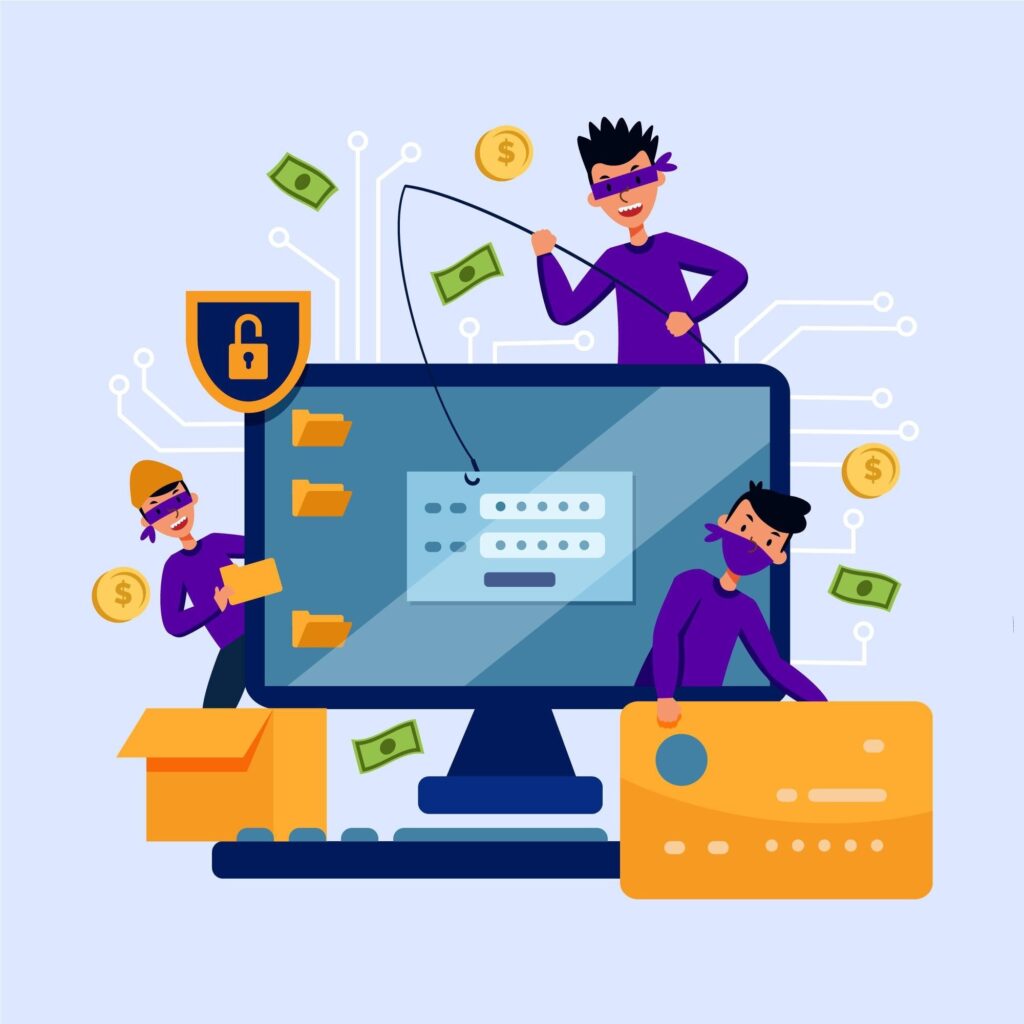
Every digital transformation initiative – cloud migration, application modernization, API integration expands the attack surface. Legacy systems often carry security debt that organizations inherit without fully understanding. When businesses accelerate transformation without parallel investment in security architecture, the gap between capability and protection widens.
Cloud Adoption
Cloud environments introduce shared-responsibility models that many organizations misunderstand. Providers secure the underlying infrastructure, but customers are responsible for securing their data, applications, and access controls. Misconfigurations in cloud environments have been responsible for some of the most significant data exposures in recent years.
Remote Work Expansion
The normalization of hybrid and fully remote work created lasting changes in enterprise risk posture. Employees accessing critical systems from home networks and personal devices bypass the traditional security controls that organizations built around office infrastructure. VPNs became chokepoints, and the volume of remote access points multiplied the potential entry vectors for attackers.
Increasing Attack Sophistication
Attacks are more sophisticated, more automated, and more targeted than ever. Threat actors now conduct detailed reconnaissance before launching campaigns. They study organizational structures through LinkedIn, identify executive names from company websites, and tailor social engineering attacks accordingly. Credential-stuffing attacks use breached username and password databases containing billions of entries to systematically test account access.
AI-Powered Cyber Attacks
Generative AI has lowered the barrier for creating convincing phishing emails, synthesizing realistic deepfake audio for fraud, and automating malware development. Adversarial AI tools are now accessible to less technically sophisticated attackers, enabling more widespread campaigns. Organizations need to account for AI-enabled threats in their risk models, including highly personalized spear-phishing at scale, automated vulnerability scanning, and AI-generated malicious code.
Major Cybersecurity Threats to Businesses
Phishing Attacks
Phishing remains the most common initial access vector in enterprise breaches, not because it is unsophisticated, but because it works. Modern phishing attacks are precise, contextually relevant, and increasingly difficult to distinguish from legitimate communication.

Business Email Compromise (BEC) represents the most financially damaging variant. Attackers impersonate executives, vendors, or partners to authorize fraudulent wire transfers or manipulate employees into sharing credentials. The FBI estimates BEC costs U.S. businesses billions annually.
Spear-phishing targets specific individuals with highly personalized content. Attackers might reference a recent company event, an ongoing project, or a colleague’s name to create credibility. Voice phishing (vishing) and SMS-based smishing extend these tactics beyond email.
Ransomware Attacks
Ransomware has evolved from opportunistic spray-and-pray campaigns to highly organized, enterprise-targeted operations. Modern ransomware groups operate like businesses with customer service portals, negotiation teams, and affiliate models that distribute attacks at scale.
Double extortion is now the standard playbook: attackers encrypt systems and exfiltrate data, then threaten to publish sensitive information publicly if ransom demands go unmet. Some groups have moved to triple extortion, contacting customers or business partners of the victim to add pressure.
Recovery from a ransomware attack is expensive even when organizations refuse to pay. Incident response costs, system restoration, productivity loss, and reputational fallout consistently make ransomware one of the most damaging threats businesses face.
Malware and Spyware
Malware encompasses a broad category of malicious software designed to damage, disrupt, or gain unauthorized access to systems. Beyond ransomware, businesses face keyloggers that capture credentials, trojans that establish persistent backdoors, rootkits that hide attacker presence deep within systems, and spyware that silently harvests sensitive information.
Fileless malware is particularly concerning because it operates entirely in memory, leaving minimal traces on disk and evading traditional signature-based antivirus solutions. These attacks leverage legitimate system tools – PowerShell, WMI, or scripting engines to execute malicious activity, making detection significantly harder.
Insider Threats
Insider threats are among the most underestimated risks in enterprise security. They encompass malicious employees deliberately exfiltrating data, disgruntled staff sabotaging systems, and well-intentioned employees who inadvertently expose sensitive information.

Privileged users system administrators, database administrators, and developers with elevated access rights represent the highest-risk insider category. Their legitimate access to sensitive systems means malicious activity can go undetected for extended periods.
Detecting insider threats requires behavioral analytics, access monitoring, and identity-aware security controls rather than purely perimeter-based defenses. Organizations that implement least-privilege access principles and regular access reviews significantly reduce their insider threat exposure.
DDoS Attacks
Distributed Denial of Service (DDoS) attacks flood infrastructure with traffic, overwhelming systems and making services unavailable to legitimate users. For e-commerce businesses, financial institutions, and online service providers, even brief outages translate directly into revenue loss.
Modern DDoS attacks are increasingly application-layer attacks (Layer 7) that mimic legitimate user behavior and are therefore harder to filter without also blocking real customers. Volumetric attacks reaching hundreds of gigabits per second can overwhelm even substantial infrastructure without dedicated DDoS mitigation services.
DDoS is also used as a distraction while security teams respond to an availability incident, attackers exploit the opportunity to conduct data exfiltration through less-monitored channels.
Supply Chain Attacks
Supply chain attacks compromise third-party vendors, software providers, or managed service providers as a vector to reach the true target. The 2020 SolarWinds attack demonstrated the devastating potential of this approach by compromising a widely used IT management platform, attackers gained access to thousands of organizations simultaneously, including multiple U.S. government agencies.
Software supply chain attacks embed malicious code into legitimate packages distributed through trusted repositories. Open-source components are a particular concern, given how extensively they are used in enterprise applications with often limited scrutiny.
Organizations that manage third-party risk only at the vendor selection stage and not on an ongoing basis, leave themselves exposed to changes in vendor security posture that occur after the initial review.
Zero-Day Exploits
Zero-day vulnerabilities are software flaws unknown to the vendor and therefore without patches. Attackers who discover or purchase zero-days can exploit them with minimal risk of detection, as no signature exists to identify the attack pattern.
Nation-state actors stockpile zero-day vulnerabilities for targeted espionage campaigns. Criminal groups trade them on dark web marketplaces. When a zero-day becomes public knowledge, the race between patch release and mass exploitation creates a critical window of vulnerability.
Mitigating zero-day risk requires layered controls network segmentation, behavioral detection, application sandboxing, and rapid patch deployment processes rather than reliance on signature-based detection alone.
Credential Theft
Credential theft is the single most prevalent technique for achieving unauthorized access to enterprise systems. Whether harvested through phishing, obtained from breach databases, or extracted through malware, stolen credentials give attackers legitimate-looking access that can persist undetected for months.
Credential stuffing attacks automatically test billions of username and password combinations from previous breaches against enterprise applications. Password reuse employees using the same password across personal and business accounts makes this trivially effective.
Multi-factor authentication (MFA) is the most impactful single control against credential-based attacks, but its deployment remains inconsistent across many enterprise environments.
Business Risks of Cybersecurity Threats

Financial Losses
The direct financial impact of a cyber attack includes incident response costs, ransom payments, system restoration, and legal fees. These costs are compounded by indirect losses: business interruption, lost contracts, regulatory fines, increased cyber insurance premiums, and the cost of customer notification required under breach disclosure laws.
For public companies, cyber incidents trigger stock price declines and increase the cost of capital. Private equity and M&A due diligence now routinely includes cybersecurity assessments that directly influence deal valuations.
Data Breaches
A data breach occurs when sensitive, confidential, or protected data is accessed, disclosed, or stolen without authorization. Enterprise data breaches typically involve customer personally identifiable information (PII), financial records, intellectual property, or protected health information.
The downstream consequences of a data breach extend well beyond immediate costs. Organizations must notify affected individuals, regulators, and in some cases, business partners. Consumer trust erodes, customer churn increases, and the organization becomes a target for class action litigation.
Reputation Damage
Brand reputation is one of the hardest assets to quantify and one of the most costly to rebuild after a security incident. Customers make decisions about sharing data and doing business based on their perception of how well an organization protects information.
High-profile breaches receive sustained media coverage. The reputational impact from being seen as an organization that failed to protect customer data can take years to fully recover from, particularly in industries where data trust is central to the value proposition.
Legal and Compliance Penalties
Regulatory frameworks including GDPR, CCPA, HIPAA, and PCI DSS impose significant penalties for security failures that result in data exposure. GDPR fines can reach 4% of global annual turnover. Sector-specific regulators, including financial services and healthcare authorities, layer additional compliance requirements on top of general data protection law.
Beyond fines, organizations face mandatory audits, consent orders that constrain how they operate, and ongoing regulatory scrutiny following a significant breach. Class action suits from affected individuals and derivative shareholder suits add further legal exposure.
Operational Disruption
Ransomware, destructive malware, and DDoS attacks can halt business operations entirely. The Colonial Pipeline attack shut down fuel supply to the U.S. East Coast for days. Healthcare providers hit by ransomware have been forced to divert patients, delay surgeries, and revert to manual record-keeping.
Even less severe incidents create measurable productivity losses. System outages, security-driven network isolation, and incident response activities consume significant employee time and leadership attention.
Real-World Cyber Attack Scenarios in Businesses
Ransomware locking enterprise systems: A manufacturing company receives a spear-phishing email targeted at an accounts payable employee. The email contains a malicious attachment disguised as an invoice. The employee opens it, a loader executes, and within hours ransomware propagates across the network using legitimate administrative tools. Production systems go offline. ERP access is cut. The company faces weeks of recovery and a seven-figure ransom demand with exfiltrated supplier contracts held as additional leverage.
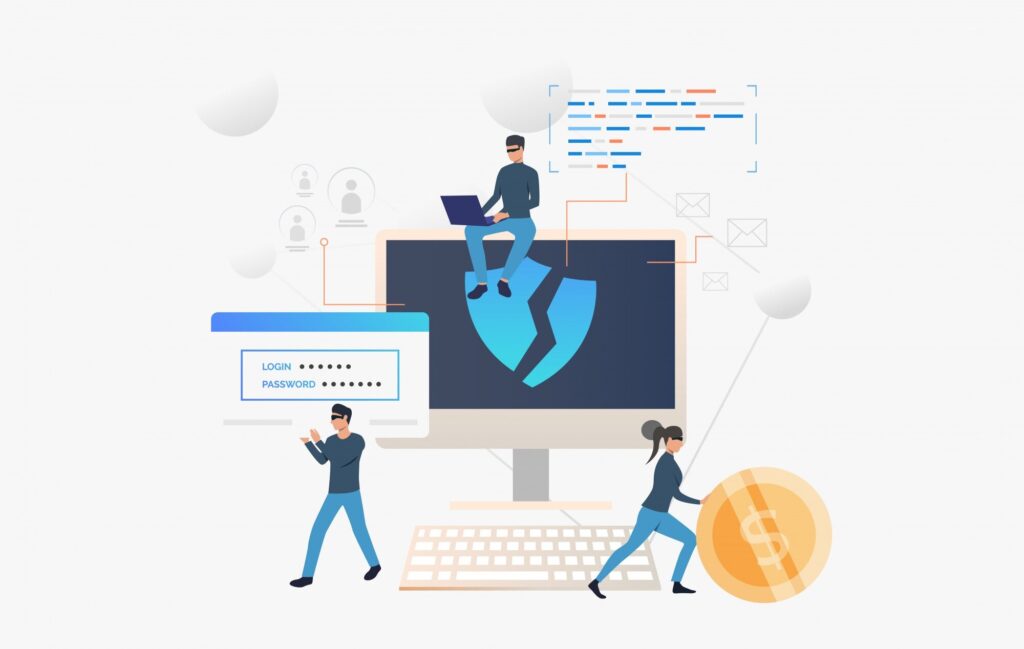
Phishing leading to credential leaks: A professional services firm’s CFO receives a convincing email appearing to come from the CEO, referencing a real board meeting scheduled for that week. The email requests urgent login to a shared document portal. The link leads to a credential-harvesting page. Within 24 hours, attackers use the captured credentials to access the firm’s financial reporting systems and email archive.
Insider data theft: A database administrator at a healthcare company, knowing his employment is being terminated, copies patient records and proprietary system documentation to a personal cloud storage account over several weeks before his departure. The exfiltration goes undetected because the access was technically authorized the issue was the absence of behavioral monitoring and data loss prevention controls.
Cloud misconfiguration breaches: A retail company’s development team provisions a new cloud storage bucket for a product launch. Default public access permissions are not modified. Search engine crawlers and automated scanning tools discover the bucket within days. Customer order data, including names, addresses, and partial payment information, is indexed and accessible publicly for three weeks before anyone notices.
How Cybersecurity Threats Impact Different Industries
Healthcare
Healthcare organizations are among the most targeted sectors globally. Medical records command premium prices on criminal marketplaces, they contain everything needed for identity fraud, insurance fraud, and targeted extortion. Beyond data theft, ransomware attacks on hospital systems create direct patient safety risks when life-critical systems become unavailable.
Healthcare faces a particularly challenging security environment because clinical systems often run legacy software that cannot be easily patched, and the pressure to maintain availability is paramount.
Financial Services
Banks, insurers, and investment firms handle massive volumes of sensitive financial data and process transactions that represent immediate value to attackers. They are targeted by sophisticated fraud campaigns, account takeover attacks, and nation-state-sponsored espionage. Regulatory requirements are stringent, the SEC, FINRA, OCC, and others all impose cybersecurity requirements, and enforcement has intensified.
Retail and E-commerce
Retailers handle payment card data, customer personally identifiable information, and loyalty program credentials at scale. Point-of-sale system compromises, e-commerce application attacks, and account takeover campaigns targeting customer accounts represent the primary threat vectors. The holiday peak shopping period consistently sees elevated attack volumes targeting e-commerce infrastructure.
Manufacturing
Manufacturing organizations increasingly depend on operational technology (OT) networks and industrial control systems that were designed for reliability, not security. As IT and OT networks converge enabling remote monitoring, predictive maintenance, and supply chain integration, these historically isolated systems become exposed to cyber threats. Attacks on manufacturing operations can halt production lines, damage physical equipment, or compromise product quality.
Government and Public Sector
Government agencies hold vast repositories of citizen data, national security information, and critical infrastructure control systems. State-sponsored threat actors target government organizations for intelligence collection. Criminal groups target agencies for data that can be used in fraud. Ransomware attacks on municipal governments have disrupted public services and exposed sensitive citizen records.
How to Prevent Cybersecurity Threats in Businesses
Implement Zero Trust Security Model
Zero trust is an architectural philosophy grounded in a simple principle: never trust, always verify. Rather than assuming everything inside the network perimeter is safe, zero trust requires continuous verification of every user, device, and connection regardless of location.
In practice, zero trust means implementing strong identity verification before granting resource access, continuously validating that the access remains appropriate as conditions change, and limiting what any given session can reach based on the principle of least privilege. Micro-segmentation prevents lateral movement when attackers do gain a foothold.
Zero trust is not a single product, it is a framework that shapes how identity, networking, endpoint, and data security controls are designed and integrated.
Deploy Multi-Factor Authentication (MFA)
MFA is among the highest-impact, most cost-effective controls available to enterprise security teams. By requiring a second verification factor beyond a password, a one-time code, a hardware token, a biometric check MFA defeats the majority of credential-based attack techniques.
Microsoft’s research indicates that MFA blocks more than 99% of automated account compromise attacks. Yet full MFA deployment across all enterprise applications, including legacy systems and internal tools, remains incomplete in many organizations.
Phishing-resistant MFA methods – hardware security keys compliant with FIDO2/WebAuthn standards provide the strongest protection against even sophisticated phishing attacks that attempt to capture MFA codes in real time.
Strengthen Identity and Access Management (IAM)
Identity and access management is the operational backbone of enterprise security. IAM security encompasses the policies, processes, and technologies that control how users, systems, and applications authenticate and what resources they can access.
Effective IAM starts with a clean, accurate identity inventory knowing who has access to what, and whether that access is still appropriate. Identity governance frameworks provide structured processes for access request, approval, and review, ensuring that access rights reflect current business need rather than accumulating over time.
Access certification – the periodic review of user entitlements by managers and data owners is a key mechanism for identifying and remediating excessive or inappropriate access before it is exploited. Regular certifications catch the access drift that occurs naturally as employees change roles, join projects, and move teams.
Role management structures access rights around business functions, reducing the complexity of managing individual entitlements while enforcing consistent access policies. Well-defined roles also make access reviews more efficient and meaningful.
Endpoint Protection and EDR
Modern endpoints – laptops, desktops, mobile devices, and servers are primary targets for malware delivery and credential theft. Endpoint Detection and Response (EDR) solutions go beyond traditional antivirus by continuously monitoring endpoint behavior, detecting anomalous activity patterns, and enabling rapid investigation and response.
EDR platforms correlate signals across endpoints to identify attack patterns that individual events might not reveal. When combined with centralized security operations, EDR significantly reduces the time between initial compromise and detection a metric known as dwell time that directly correlates with breach severity.
Mobile device management (MDM) and application control policies extend endpoint protection to mobile devices and ensure that only authorized applications can execute in the enterprise environment.
Employee Security Awareness Training
The human element is involved in the majority of security incidents. Security awareness training programs that are limited to annual compliance checkboxes are insufficient. Effective programs deliver continuous, targeted education that responds to the actual threat patterns employees encounter.
Simulated phishing campaigns expose employees to realistic attack scenarios and identify who needs additional education. Security awareness content delivered in small, digestible formats through the applications employees already use drives better retention than infrequent lengthy sessions.
Building a security-conscious culture where employees feel comfortable reporting suspicious activity without fear of blame is ultimately more impactful than any individual training module. Psychological safety around reporting is a force multiplier for the security team.
Security Monitoring and SIEM Tools
Security Information and Event Management (SIEM) platforms aggregate and correlate log data from across the enterprise environment – endpoints, network devices, cloud services, applications, and identity providers to detect suspicious patterns and generate actionable alerts.
Modern SIEM solutions incorporate machine learning to establish behavioral baselines and identify anomalies that rules-based detection would miss. User and Entity Behavior Analytics (UEBA) extends this to detect abnormal user behavior such as accessing unusual volumes of data or logging in from unexpected locations that may indicate compromised credentials or insider threat activity.
A Security Operations Center (SOC) – whether in-house or delivered through a managed security services provider (MSSP) – provides the human expertise to triage alerts, investigate incidents, and coordinate response. The quality of SOC operations significantly influences how quickly attacks are contained and how severe the business impact becomes.
Regular Vulnerability Assessments
Vulnerability assessment programs systematically identify, classify, and prioritize security weaknesses in the enterprise environment before attackers can exploit them. Regular internal and external vulnerability scans, combined with periodic penetration testing by qualified security professionals, provide the visibility needed to maintain an accurate risk picture.
Penetration testing simulates real-world attack scenarios to identify paths that automated scanners miss. Red team exercises go further, simulating persistent, advanced attackers over extended engagements to test the effectiveness of detection and response capabilities.
Vulnerability management programs should prioritize remediation based on actual exploitability and business context, not just severity scores, to direct limited patching resources where they create the most risk reduction.
Incident Response Planning
An incident response plan is the operational playbook that determines how an organization detects, contains, eradicates, and recovers from a security incident. Organizations that conduct regular incident response exercises including tabletop exercises involving executive and board participation consistently demonstrate faster recovery and lower breach costs than those that treat incident response as a theoretical document.
The plan should define clear escalation paths, communication protocols, roles and responsibilities, and decision authorities. When a ransomware attack hits at 2 AM on a Saturday, the people responding need to know exactly who to call and what decisions they can make without waiting for executive approval.
Role of Identity and Access Management in Cybersecurity
Identity is where most modern attacks begin. Whether through compromised credentials, exploited privilege, or abused access rights, the common thread in the majority of significant breaches is the misuse of legitimate identity.

This is what makes identity and access management not just a compliance function but a fundamental security control arguably the most important one in a cloud and remote-work environment where the traditional network perimeter has dissolved.
IAM as the first line of defense: When every access request must be authenticated, authorized, and verified against current policy before it is permitted, the attack surface for credential-based exploitation narrows significantly. Strong IAM reduces the value of stolen credentials by ensuring that authentication alone is insufficient without additional verification factors and that access is restricted to exactly what the user’s role requires.
Access control importance: Granular access control policies prevent lateral movement, the technique attackers use to navigate from an initial foothold to high-value targets like financial systems, intellectual property repositories, and identity infrastructure. When accounts have only the access they need, a compromised account limits rather than enables an attacker’s reach.
Least privilege principle: The principle of least privilege dictates that users, systems, and applications should have access only to the resources required for their current function – nothing more. Implementing least privilege consistently requires both technical controls and ongoing governance processes to prevent the gradual accumulation of access rights that occurs naturally over time.
Identity governance: Identity governance frameworks provide the policy structure and operational processes to manage the identity lifecycle – from provisioning when an employee joins, through access changes as they move roles, to de-provisioning when they leave. Orphaned accounts and over-privileged identities are among the most commonly exploited conditions in enterprise environments.
Access certification: Regular access certification reviews bring managers and data owners into the governance process, ensuring that access decisions reflect current business reality. Automated access reviews, triggered by role changes or policy violations, complement manual certifications for dynamic environments.
Cloud Security Risks and Solutions
Misconfigured Cloud Systems
Cloud misconfiguration is consistently identified as the leading cause of cloud security incidents. The flexibility that makes cloud environments powerful also creates extensive configuration surface area where defaults may not align with security requirements. Public bucket policies, overly permissive network security groups, disabled logging, and unencrypted storage are common misconfigurations that create significant exposure.
Cloud Security Posture Management (CSPM) tools automate the continuous assessment of cloud configurations against security benchmarks and organizational policies. They provide real-time visibility into misconfigurations and policy drift, enabling rapid remediation before attackers discover and exploit them.
Unauthorized Access
Cloud environments are accessed through APIs and management consoles that are reachable from the internet by design which means that credential theft or privilege escalation in cloud contexts can be particularly damaging. Attackers who gain access to cloud management credentials can provision resources for cryptomining, exfiltrate data stored in cloud services, or delete infrastructure entirely.
Privileged access management (PAM) controls applied to cloud management functions, combined with just-in-time access provisioning for administrative activities, significantly reduce the risk of unauthorized cloud access.
Data Leakage Risks
Data leakage in cloud environments occurs through misconfiguration, unauthorized sharing, excessive permissions, and compromised integrations. SaaS applications connected to enterprise cloud environments through OAuth integrations can inadvertently create data exfiltration paths when those integrations are over-permissioned.
Data Loss Prevention (DLP) tools monitor data movement in cloud environments, detecting and blocking unauthorized transfers of sensitive information. Cloud Access Security Brokers (CASBs) provide visibility and control over data flowing through cloud applications.
Cloud Security Best Practices
Effective cloud security requires applying the same identity and access management discipline that governs on-premises environments and often more rigorously. Every cloud resource should have a clear owner. Access to cloud management functions should require MFA and follow least-privilege principles. Encryption should be applied to data at rest and in transit. Logging and monitoring should be comprehensive and centralized.
The shared responsibility model should be mapped clearly for every cloud service in use, ensuring that the organization’s security obligations are explicitly understood and addressed.
Cyber Risk Management Framework for Enterprises

Risk Identification
Effective cyber risk management begins with a comprehensive and current inventory of assets, data, and the threats relevant to the business. Risk identification exercises map business processes to the systems and data they depend on, and then evaluate the threat landscape relevant to each component.
Threat modeling – the systematic analysis of how an attacker might target specific systems or data provides structured insight into where risk is concentrated and what controls would have the greatest impact.
Risk Assessment
Risk assessment quantifies identified risks by evaluating the likelihood of exploitation and the potential business impact. Mature organizations use quantitative risk analysis to express risk in financial terms, enabling comparison with other business risks and informed investment decisions.
Vulnerability data, threat intelligence, and business impact analysis combine to produce a prioritized risk register that guides security investment and remediation priorities.
Risk Mitigation
Risk mitigation decisions involve choosing between accepting, avoiding, transferring, or reducing each identified risk based on cost-benefit analysis. Technical controls address exploitable vulnerabilities. Process controls reduce human error. Contractual controls shift liability to vendors. Cyber insurance transfers residual financial risk.
Not all risk can or should be eliminated. The goal is to reduce risk to a level that is acceptable given business objectives and available resources.
Continuous Monitoring
The threat landscape changes continuously. New vulnerabilities are discovered, attackers develop new techniques, and business changes create new risk conditions. Continuous monitoring ensures that the organization’s risk picture remains current and that security controls are operating as intended.
Automated monitoring through SIEM, CSPM, and endpoint security platforms provides the telemetry needed for continuous visibility. Regular reporting to executive leadership and the board maintains the organizational attention and investment levels that effective security programs require.
Best Practices to Protect Business from Cyber Threats
Implement Security Policies
Security policies translate organizational risk tolerance into concrete, enforceable requirements. Acceptable use policies, access control policies, data classification frameworks, and incident reporting procedures create the foundation for consistent security behavior across the enterprise.
Policies that exist only as documents in a compliance repository are of limited value. Effective policies are communicated, trained, technically enforced where possible, and regularly reviewed to reflect changes in the threat environment and business context.
Regular Security Audits
Security audits provide independent verification that controls are operating effectively. Internal audits assess compliance with security policies and standards. External audits and assessments provide objective perspective and identify gaps that internal familiarity can obscure.
Compliance audits against frameworks like ISO 27001, SOC 2, NIST CSF, or industry-specific standards provide structured review against established security benchmarks. Audit findings should drive a tracked remediation process with clear ownership and timelines.
Access Control Management
Access control management is an ongoing operational discipline, not a one-time configuration exercise. User accounts accumulate access rights over time as employees join projects, change roles, and request temporary access that becomes permanent. Managing this drift requires automated provisioning and de-provisioning workflows, regular access reviews, and monitoring for anomalous access patterns.
Privileged accounts – those with administrative or elevated access rights require additional controls: dedicated privileged access workstations, session recording, just-in-time access provisioning, and enhanced monitoring.
Patch Management
Unpatched vulnerabilities are among the most reliably exploited conditions in enterprise environments. Attackers routinely scan for systems running software with known vulnerabilities and exploit them within days or hours of public disclosure.
Effective patch management programs maintain complete software inventories, monitor vulnerability disclosures, prioritize patching based on exploitability and asset criticality, and have defined timelines for deploying patches across different severity levels. Automated patch deployment reduces the window between patch availability and deployment, reducing exposure during the critical period following vulnerability disclosure.
Backup and Disaster Recovery
Comprehensive, tested backup programs are the most important ransomware mitigation control available. When organizations can restore from clean backups, ransomware payments become unnecessary and recovery timelines compress significantly.
Effective backup programs follow the 3-2-1 rule: three copies of data, on two different media types, with one copy stored offline or in an immutable state that cannot be encrypted or deleted by ransomware affecting production systems. Recovery capability should be regularly tested – untested backups are an assumption, not a control.
Future of Cybersecurity Threats

AI-Powered Cyber Attacks
The integration of AI into offensive security operations is already underway and accelerating. Attackers use large language models to generate highly personalized phishing content at scale, eliminating the grammatical errors and formatting inconsistencies that previously helped recipients identify malicious emails.
AI-powered reconnaissance automates the collection and analysis of public information about target organizations, enabling attackers to build detailed profiles more quickly than previously possible. Adversarial AI will increasingly be used to identify vulnerabilities in software and generate working exploits with minimal human involvement.
Deepfake-Based Attacks
Deepfake technology – AI-generated synthetic audio and video is being weaponized for fraud and social engineering. Voice deepfakes have been used in real-world attacks to impersonate executives in phone calls authorizing fraudulent transfers. As video deepfake quality improves and generation becomes real-time, the potential for manipulation in video calls and remote authentication scenarios grows significantly.
Multi-factor authentication mechanisms that rely on voice or facial recognition will face increasing pressure from deepfake attacks. Out-of-band verification processes that do not rely solely on audio or visual confirmation will become more important.
Automated Malware
Automated malware development platforms lower the cost and complexity of creating new malicious software. AI-assisted code generation can produce functional malware variants that evade existing signatures, accelerating the traditional cat-and-mouse dynamic between attackers and defenders.
Polymorphic and metamorphic malware – which modifies its own code to evade detection will become more sophisticated and more widely deployed as AI tooling makes previously advanced techniques accessible to a broader attacker population.
Quantum Computing Risks
Quantum computing poses a long-term but serious threat to current cryptographic standards. The asymmetric encryption algorithms that protect internet communications, authentication tokens, and stored sensitive data today are theoretically vulnerable to quantum computers with sufficient capability.
The timeline for cryptographically relevant quantum computers remains uncertain, but organizations handling data with long-term sensitivity requirements including government agencies, financial institutions, and healthcare organizations need to begin planning for cryptographic agility: the ability to migrate to quantum-resistant algorithms when standards are finalized and implementations are available.
Conclusion:
Cybersecurity threats to businesses are not a static problem with a fixed solution. They are a continuously evolving challenge that requires ongoing investment, adaptation, and organizational commitment to address effectively.
The trajectory is clear: attacks are becoming more sophisticated, more automated, and more impactful. Digital transformation and cloud adoption continue to expand the attack surface. AI is accelerating both the offense and the defense. Organizations that treat cybersecurity as a compliance checkbox will find themselves consistently behind a threat landscape that does not pause for budget cycles or organizational change.
The businesses that manage cyber risk effectively share common characteristics. They treat security as a business risk function, not purely a technical one. They invest in foundational controls strong identity and access management, zero trust architecture, endpoint protection, and security monitoring rather than chasing point solutions for the latest threat. They build governance structures that include executive visibility, regular board reporting, and clear accountability.
Zero trust security and identity and access management are the architectural foundations that modern enterprise security programs must be built on. When every access request is verified, every identity is governed, and every privilege is earned and regularly reviewed, the attack surface that adversaries rely on shrinks dramatically.
Security modernization is ultimately a business imperative. The organizations that invest in building resilient, identity-centric security programs today are building a foundation for sustainable growth in an environment where cyber risk is permanent. Those that delay are accumulating technical and security debt that becomes increasingly costly to address often at the worst possible moment.
Frequently Asked Questions:
What are cybersecurity threats to businesses?
Cybersecurity threats to businesses are malicious activities, system vulnerabilities, or human errors that attackers exploit to gain unauthorized access, steal sensitive data, disrupt operations, or extort organizations. They range from phishing emails targeting individual employees to sophisticated nation-state attacks on critical infrastructure. Common threats include ransomware, phishing, insider attacks, supply chain compromises, and credential theft.
What are the most common cyber attacks on companies?
The most common cyber attacks on companies are phishing attacks, ransomware, credential theft, Business Email Compromise (BEC), malware infections, and DDoS attacks. Phishing remains the leading initial access vector in enterprise breaches, while ransomware causes the most operational disruption. Supply chain attacks and cloud misconfigurations have grown significantly in frequency and impact over recent years.
How do phishing attacks work?
Phishing attacks work by deceiving recipients into believing a malicious communication is legitimate. Attackers craft emails, messages, or websites that impersonate trusted entities – executives, vendors, financial institutions, or cloud service providers and prompt the target to click a malicious link, open an infected attachment, or enter credentials into a fake login page. Spear-phishing refines this by using personal details to make the deception more convincing.
What is ransomware and how does it affect businesses?
Ransomware is malicious software that encrypts an organization’s files and systems, rendering them inaccessible until a ransom is paid. Modern ransomware groups also exfiltrate data before encrypting it – threatening to publish sensitive information publicly if demands go unmet. For businesses, the impact includes operational shutdown, lost revenue, recovery costs, regulatory exposure, and reputational damage. Recovery can take weeks even when organizations refuse to pay and restore from backups.
How can businesses prevent cyber attacks?
Businesses can prevent cyber attacks through a layered security approach that includes deploying multi-factor authentication, implementing zero trust security architecture, maintaining comprehensive identity and access management programs, running regular security awareness training, applying timely patches, monitoring environments continuously with SIEM tools, and maintaining tested incident response plans. No single control is sufficient – effective prevention requires overlapping layers of technical, process, and governance controls.
What is zero trust security?
Zero trust security is an architectural model built on the principle of “never trust, always verify.” Rather than assuming that users or systems inside the corporate network are safe, zero trust requires continuous verification of every user, device, and connection before granting access to any resource. It combines strong identity verification, least-privilege access control, micro-segmentation, and continuous monitoring to minimize the risk of both external attacks and lateral movement by attackers who have gained an initial foothold.
